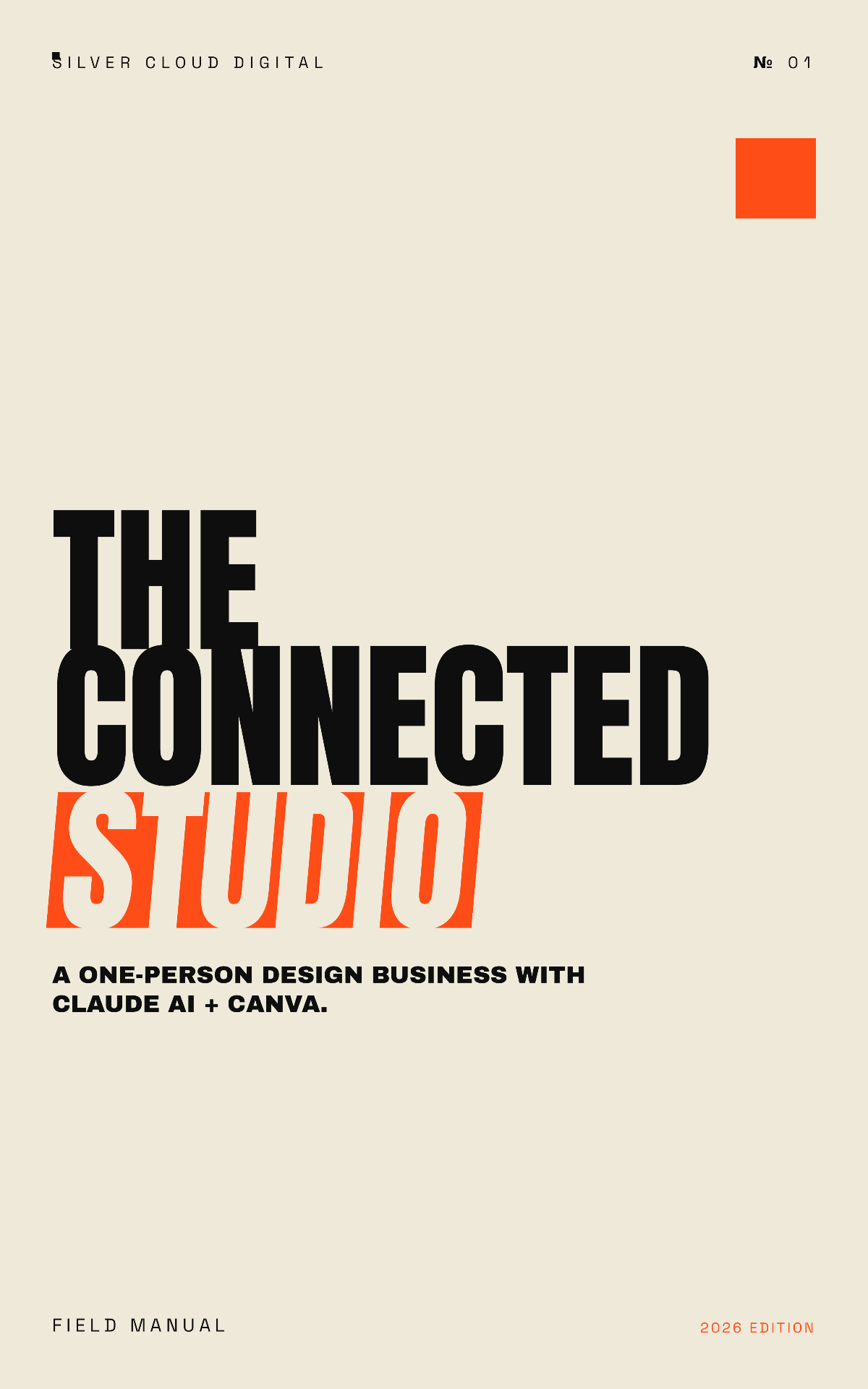
The AI does the easy part.You do the part that gets paid.
A one-person design business you run with Claude AI and Canva — built as a system, sold to people who actually need it. No hype. A craft, written down.
Everyone got the tools. Almost no one does the rest.
Something changed quietly this year. AI assistants can now operate design software directly — Claude connects to Canva and produces real, editable work from a sentence. The cost of producing a competent draft collapsed.
Here's what didn't collapse: knowing what to make, for whom, at what price, to what standard, and how to find the person willing to pay. That gap is the entire business. The tools are free to everyone now. This book is the rest.
What this is. What it isn't.
It is NOT
- —A way to get rich without working.
- —Passive. You will touch clients.
- —"Free money" — there's a small real monthly cost, priced out plainly inside.
- —The inflated version. That's sold everywhere else.
It IS
- —A documented system for one person, with no design training.
- —Work small businesses actually pay for.
- —Fast enough that the economics work.
- —A real opportunity — in its real shape.
A 55-page field manual. Three parts.
Foundation
The real opportunity, an honest income timeline, the exact setup and its true cost, and the one skill that actually matters: judgment, not prompting.
Three services you can sell
Logo & brand identity, paid-advertising creative (the one that recurs every month), and digital products that find clients for you.
Turning it into a business
First clients, pricing the outcome instead of the hour, delivering without wrecking your reputation, and systemizing it so it scales past your own hands. Plus three appendices, including a full troubleshooting guide.
+ The Master Prompts
The companion pack: the eight production prompts from the book, lifted out so you can run them beside your work — the Sub-Niche & Gap Finder, the Brief-to-Generation Engine, the Ad Teardown & Rebuild, the Digital Product Builder, the Delivery & Upsell Composer, the Platform Listing Builder, the Ad Intelligence Brief, and the Portfolio Piece Builder. Long, structured, copy-paste-ready.
Who it's for. Who it isn't.
For you if
You'll do the work, you want a craft and a system, and you're tired of "make $10k with AI" content that never says how.
Not for you if
You want passive income, you won't touch a client, or you need it to be free. The book will tell you the same thing — bluntly — so save your money if that's the ask.
From people who did the work.
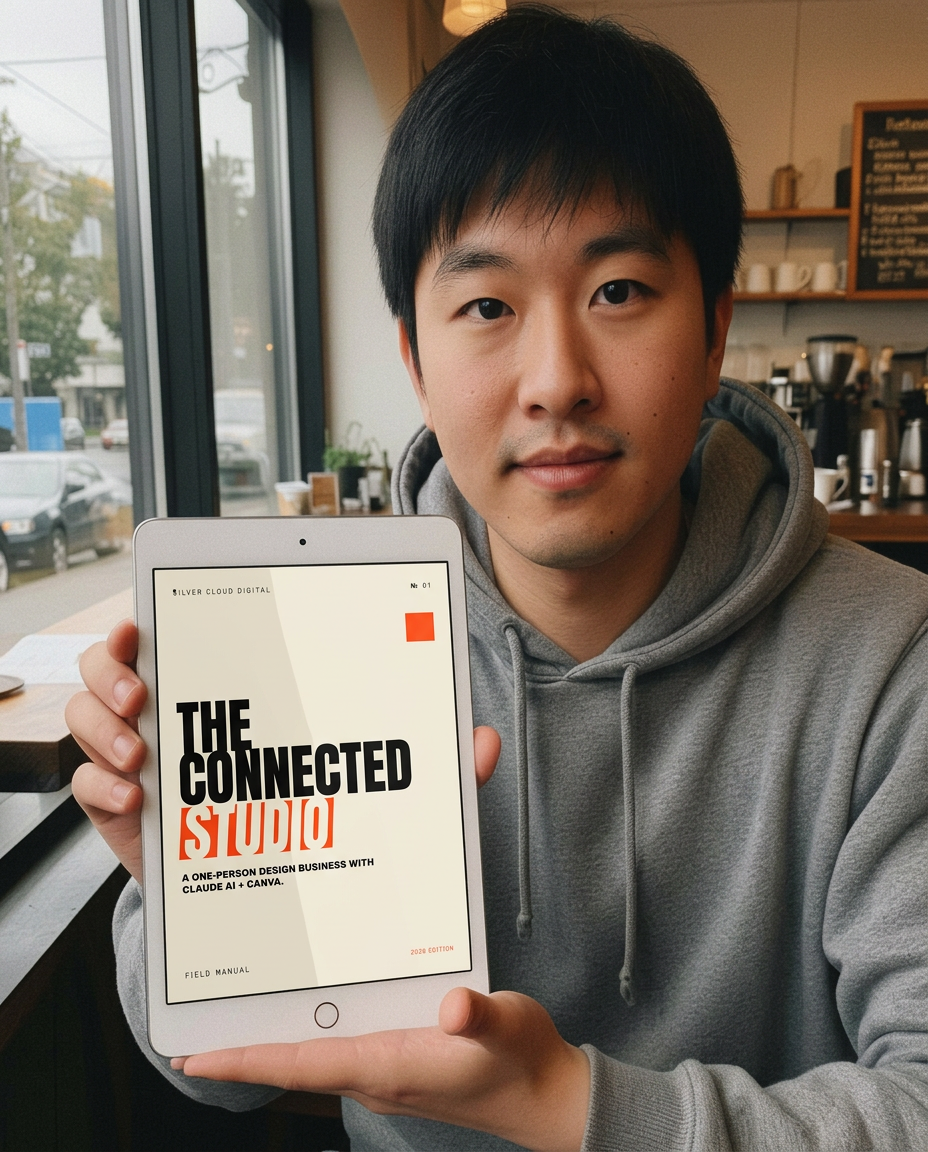
I'd bought a few AI courses before this. What I liked here was the bit about picking one small offer and just sending it. Took me about three weeks to land a small logo job — nothing huge, but it was the first one.
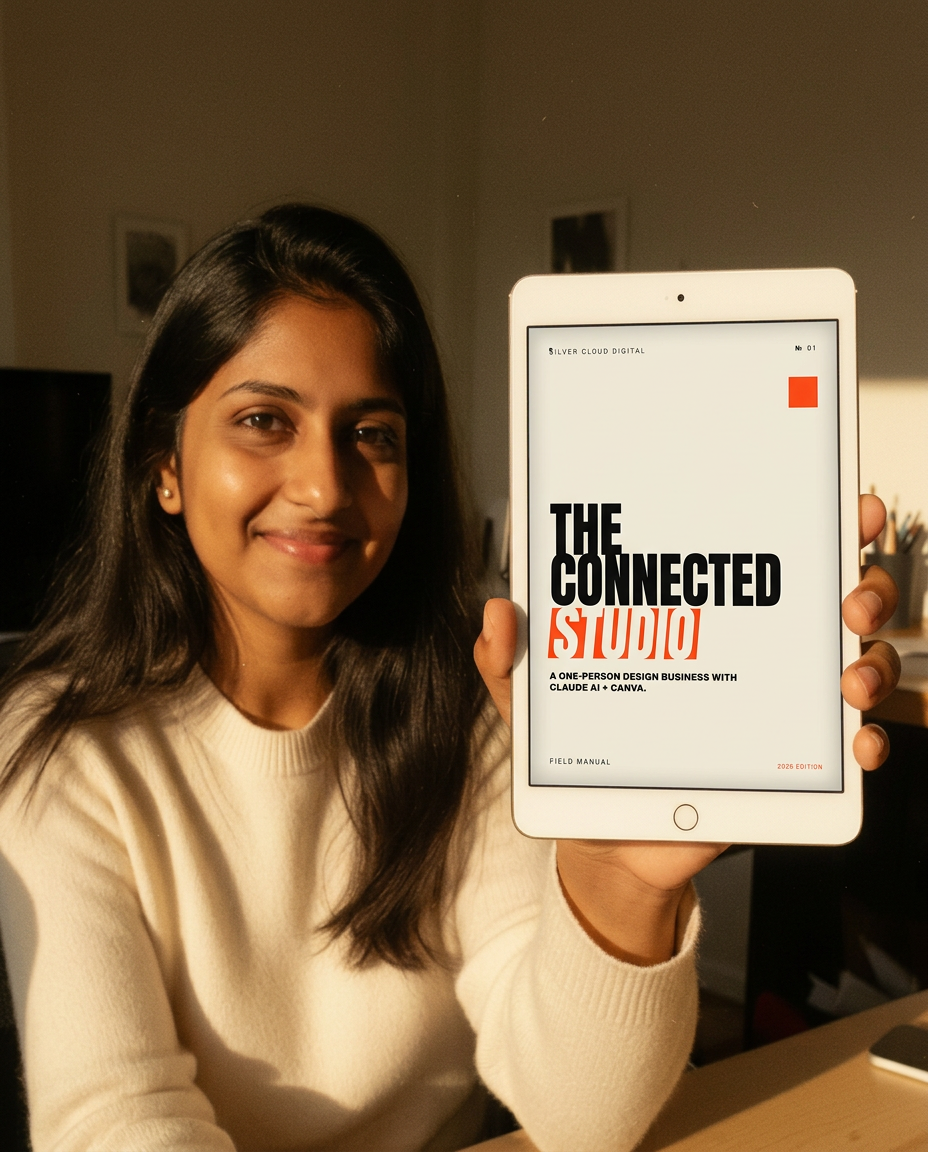
I've been doing this on the side for a few months. One small gym signed on for monthly ad creative, which covers my Canva and Claude subscriptions and a bit more. It's slow, honest progress.
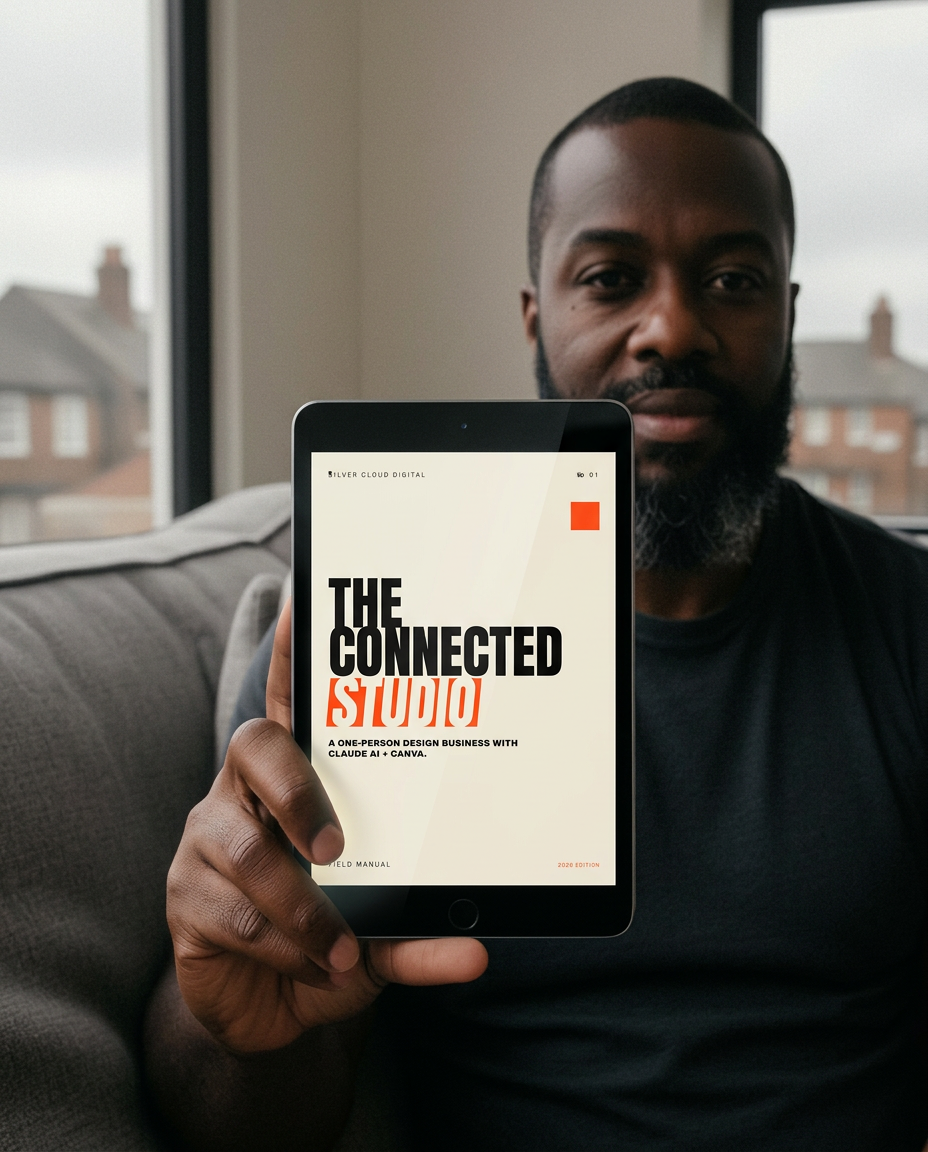
I'm not a designer and I second-guess everything. Having the prompts as a starting point meant I wasn't staring at a blank Canva file anymore. That was the main thing for me.
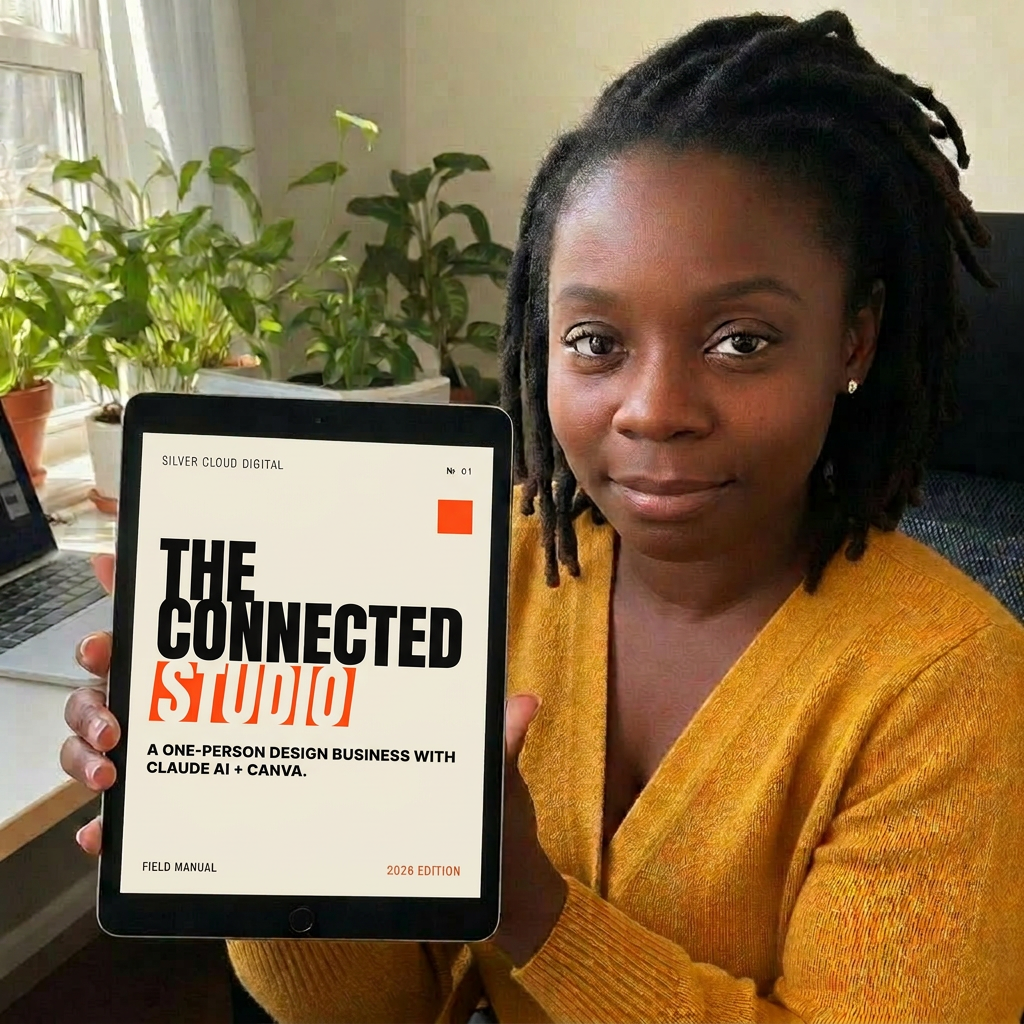
I'm still in my day job. I've picked up two small clients in the evenings and I'm trying not to get ahead of myself. The book helped me figure out what to actually offer first.
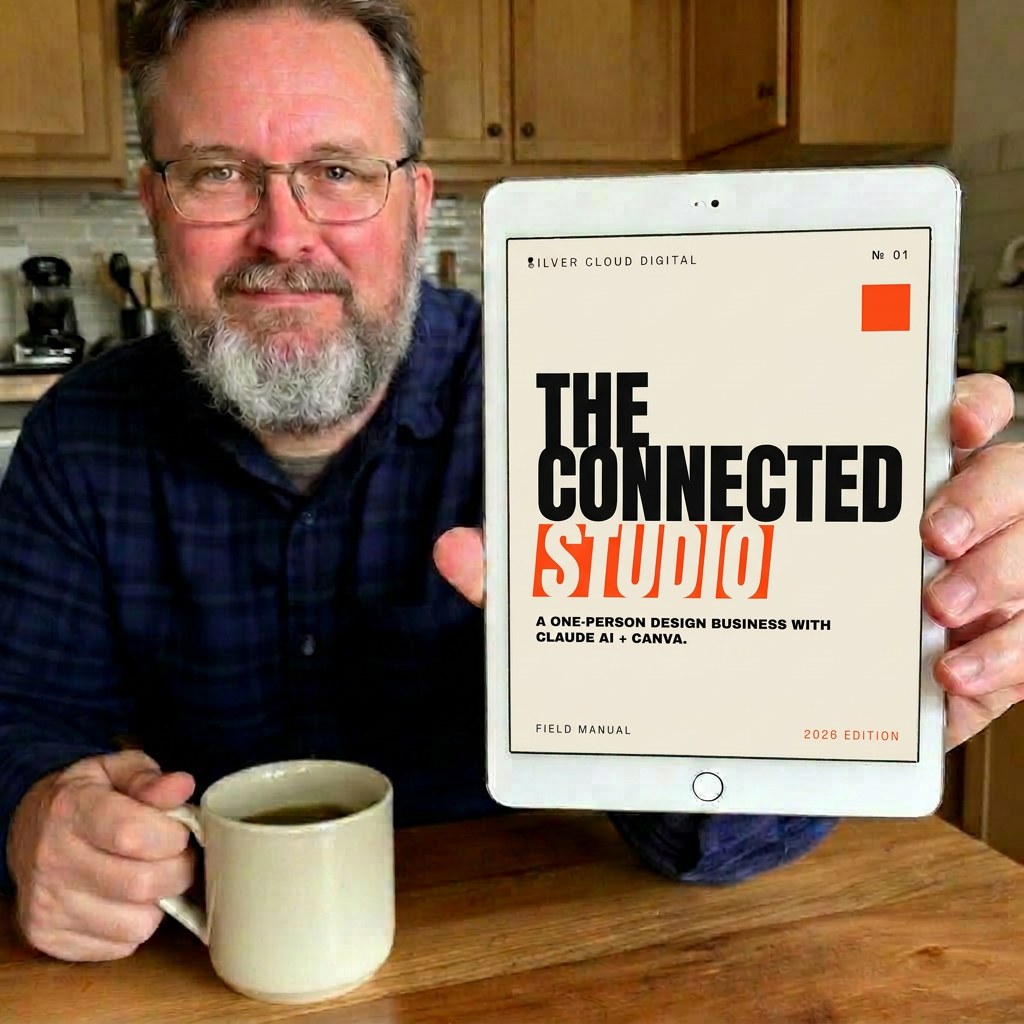
49, sceptical, not a creative type. I read it over a weekend and worked through the checklist on weeknights. Sent my first invoice a couple of weeks in. It's a side thing for now.
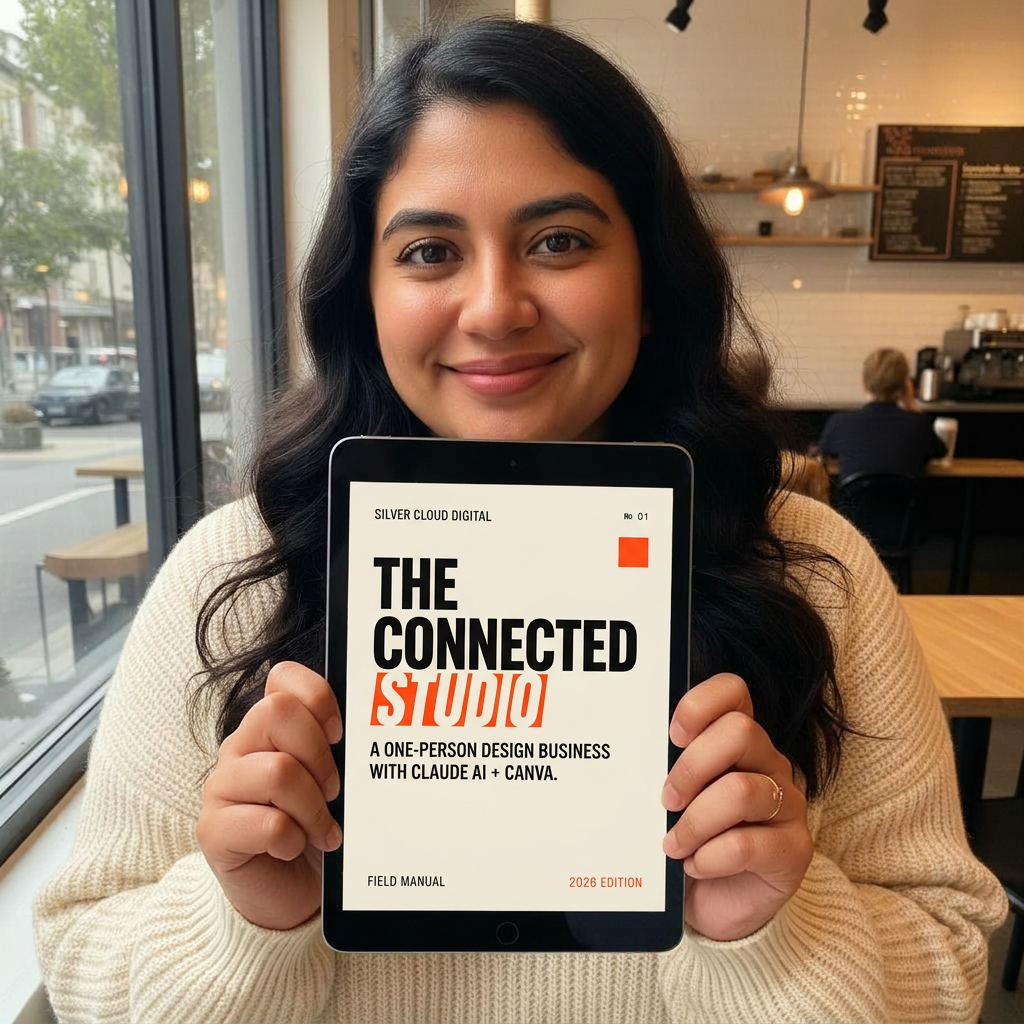
The pricing section made me look hard at what I'd been charging. I've nudged my rates up on the last two projects and nobody pushed back. Small change, but it's adding up.
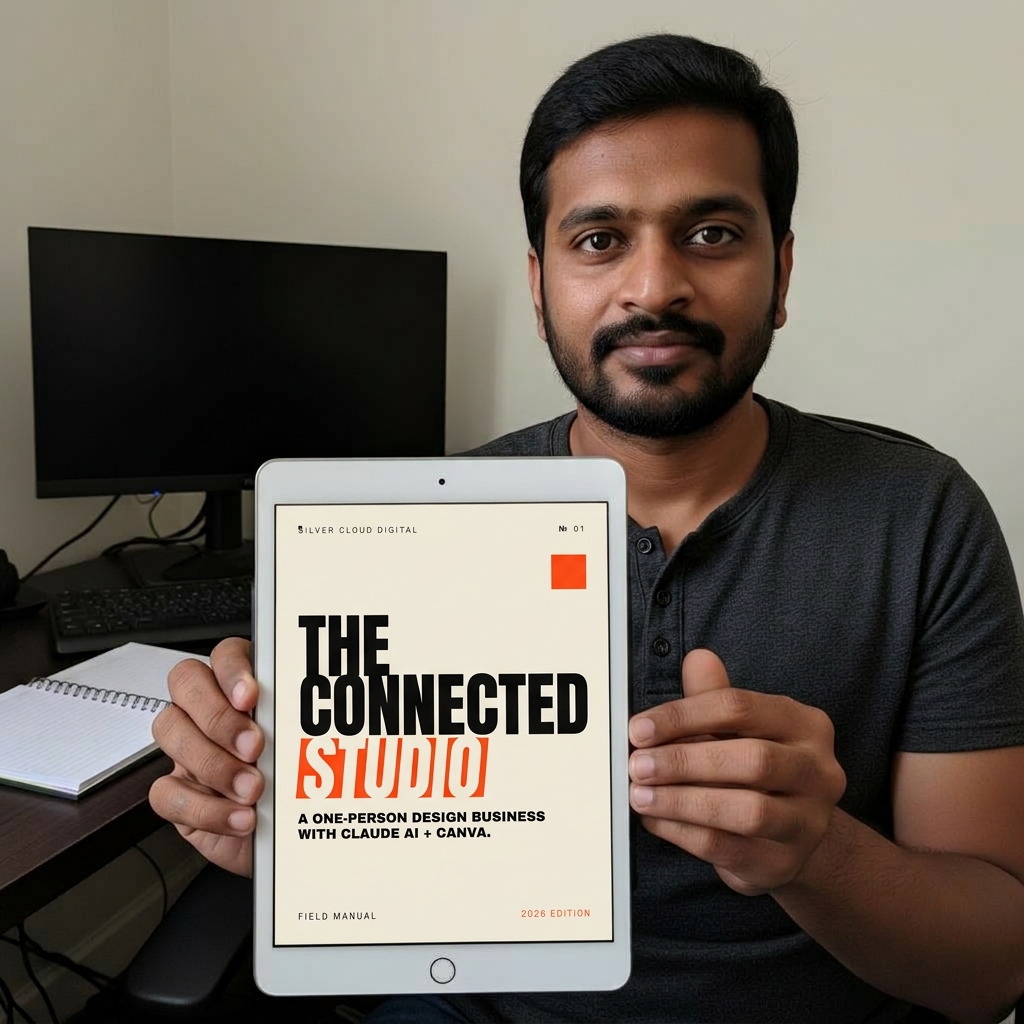
I'm a developer, design isn't my thing. Using the prompts I can put together landing pages for client projects that don't look obviously templated. It saves me hiring out for the small stuff.
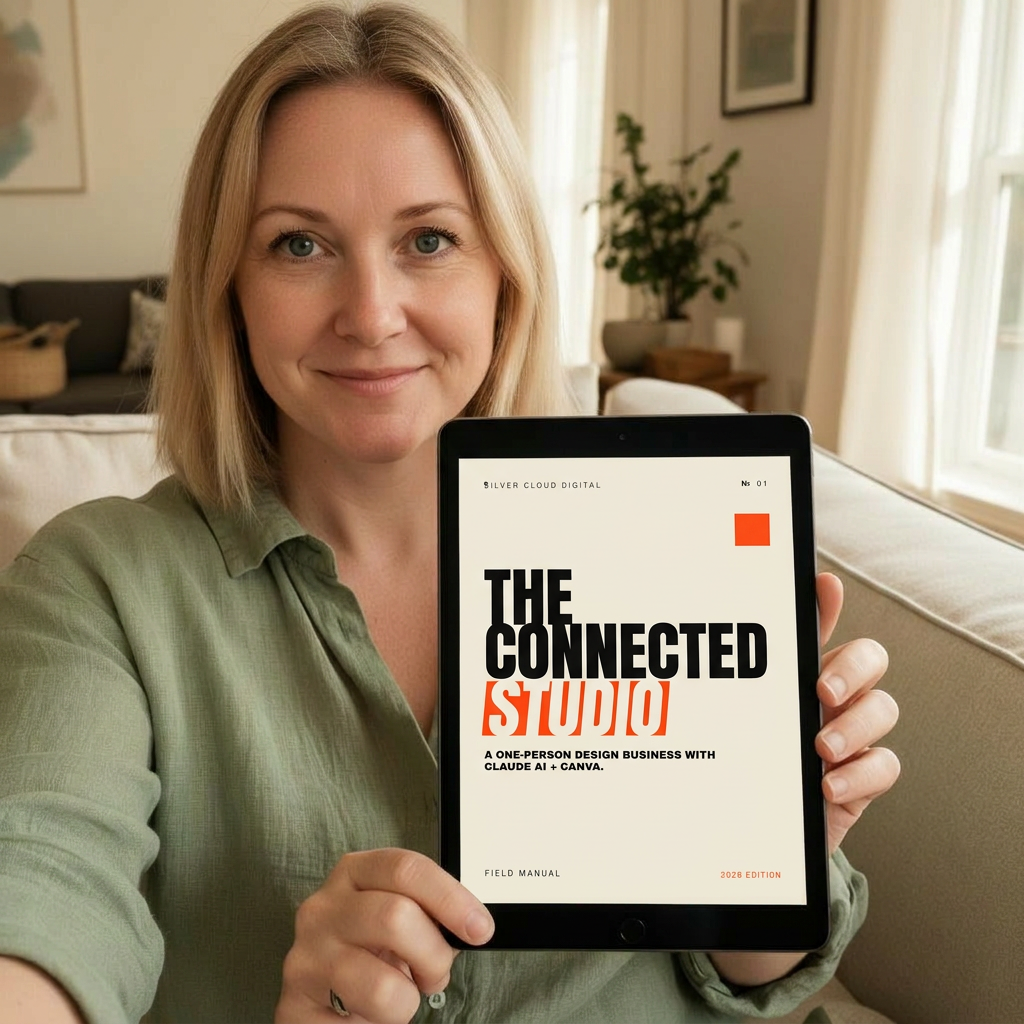
Honestly went in expecting fluff. It's not that — it's mostly a process you run through. I don't agree with every opinion in it, but the structure was what I was missing.
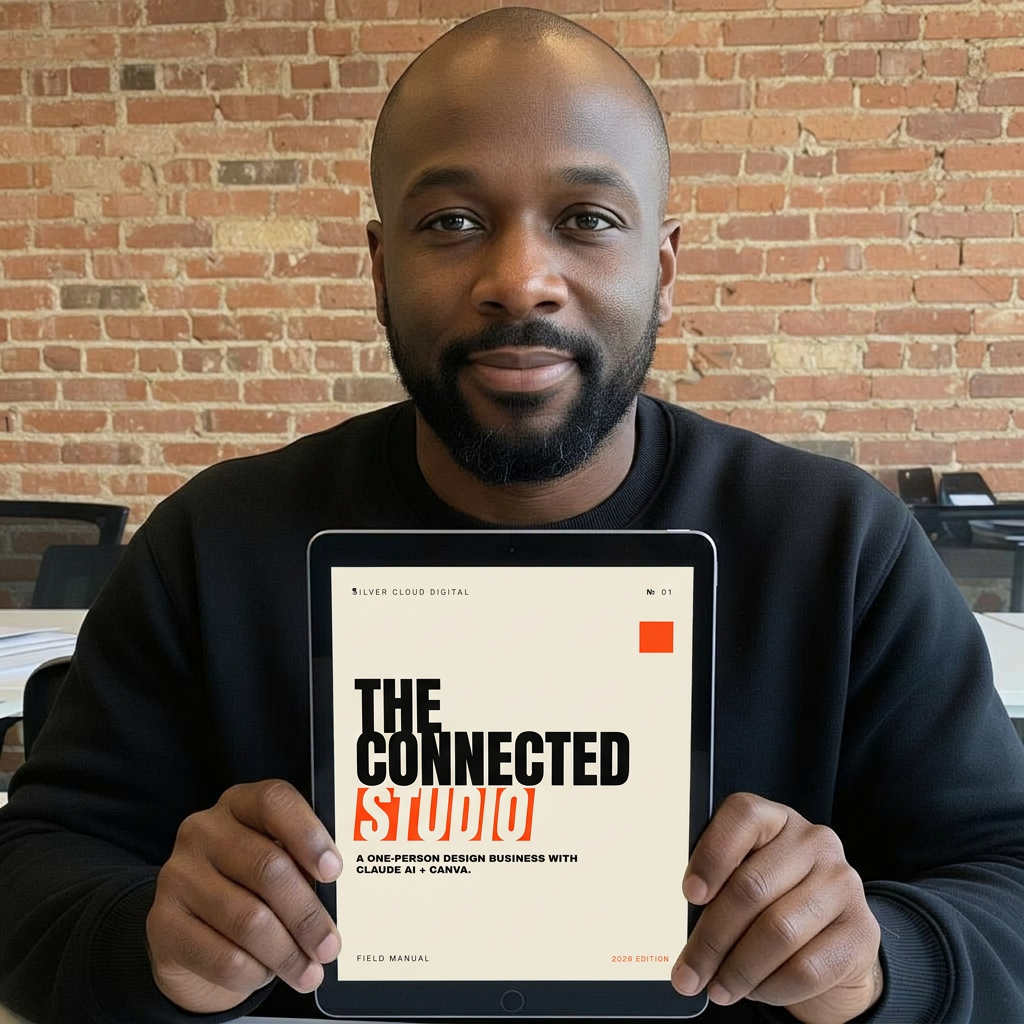
Switching careers, so I started small. A neighbourhood restaurant let me do a menu refresh and a few social posts. It's not life-changing money but it's a real project I can point to.
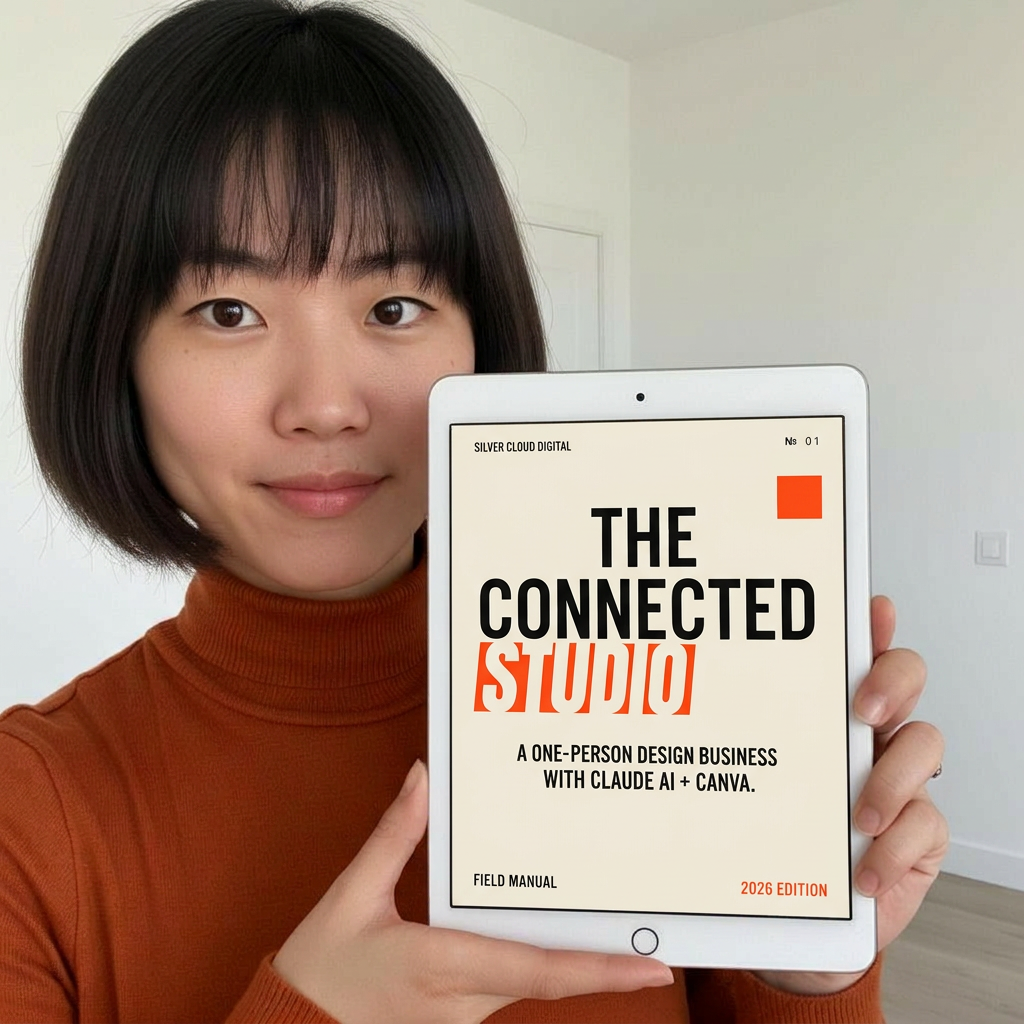
I'm already a designer, so a lot of the craft stuff wasn't new. What helped me was the side about packaging it as a one-person business — that's the part I'd never thought through properly.
Real working snapshots from readers running the system. Shared with permission, lightly edited for length. Results vary — what you get out depends on the work you put in.
Get the system.
The Connected Studio. 55-page field manual. Instant PDF.
The book, the Master Prompts pack, and an audio overview (MP3) to listen on the go. Save $9 — all three for less than the prompts alone.
The Master Prompts pack on its own. Upgrade to the book any time.
Read it. If it's not what it says — refund.
If it isn't the honest, usable system it claims to be, reply within 30 days and get a full refund. No form, no friction. I'd rather lose the sale than have you keep something that didn't deliver — the same standard the book tells you to hold with your own clients.
The honest answers.
Stop trading hours.Build the system.
A one-person design business with Claude AI + Canva — the field manual.